

💬 WhatsApp us — ask anything or use the form below
- ⭐ 4.4/5 on TripAdvisor (47 reviews)
- 📍 Local operator
- 💬 Direct WhatsApp
- 🔄 Flexible options
- 🗓 Free cancellation up to 24 hours before departure.
Private tour — price per person depends on group size:
| 1 traveler | $590 / person |
| 2 travelers | $395 / person |
| 3 travelers | $315 / person |
| 4 travelers | $270 / person |
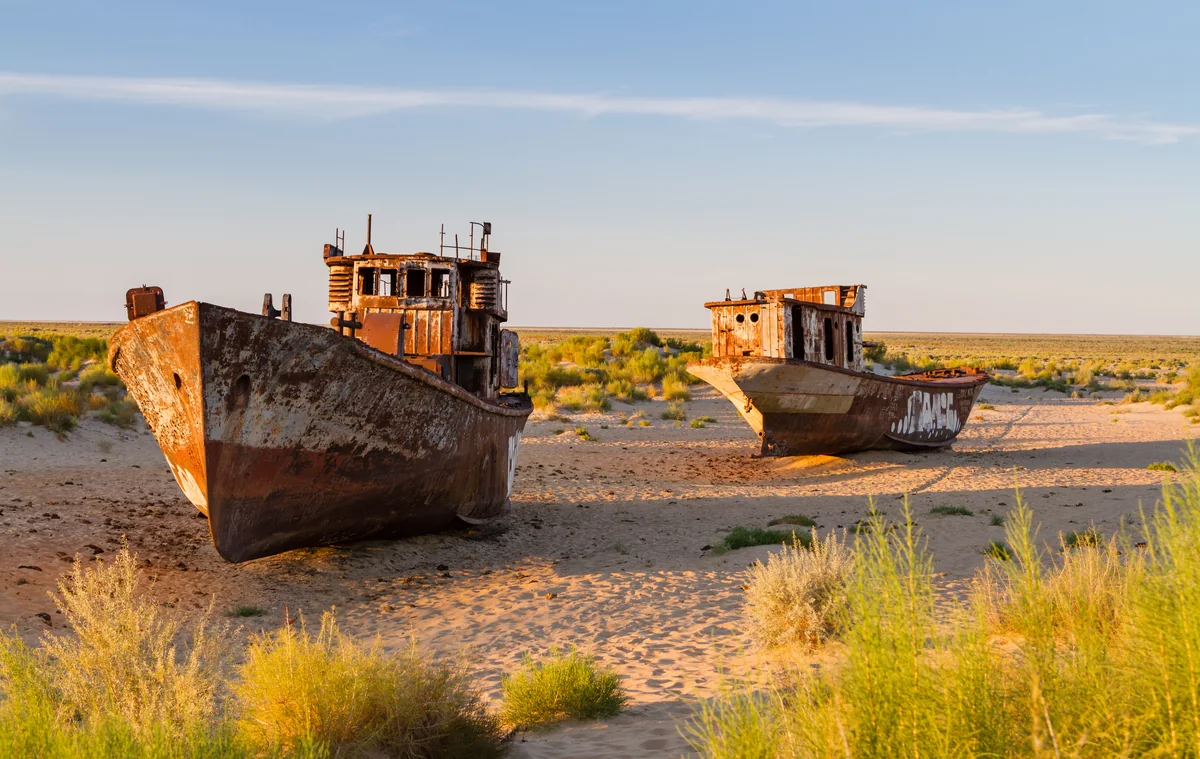
Within living memory Moynaq was a fishing port on the Aral Sea. Then the rivers that fed the sea were drained for cotton and the water retreated — more than a hundred kilometres — leaving the fishing fleet stranded on the sand. The ship graveyard that remains is one of the most haunting sights in Central Asia.
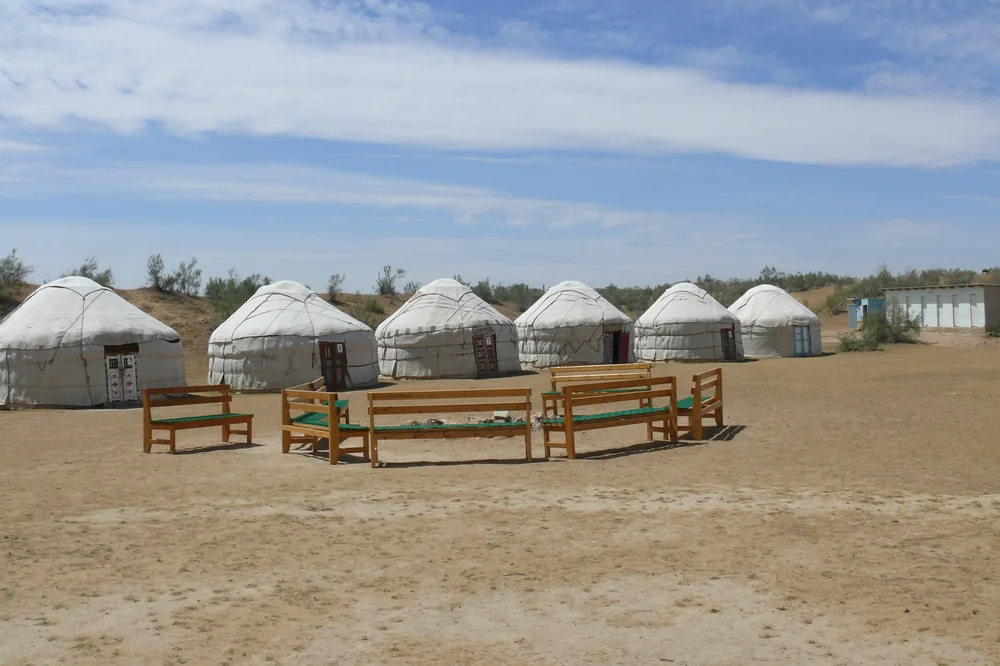
This is the full version of the trip: not just the boats, but a 4WD run out to the water itself. From Moynaq you cross the old seabed and climb onto the Ustyurt plateau, following it to the current shore of the Aral, where you spend the night in a yurt camp — dinner round the fire, and a sky thick with stars.
It is a real expedition, with long drives and simple comforts, and one of the few tours in Uzbekistan that ends at genuine wilderness.
Khiva to Moynaq for the ship graveyard, then off-road across the seabed and the Ustyurt plateau to the Aral shore.
A yurt camp near the water — dinner round the fire and a genuinely dark, star-filled sky.
The Aral in the morning light, then the long drive back across Karakalpakstan to Khiva.
It can start and end in Nukus to shorten the driving, or run as a calmer 3-day trip with the Savitsky Museum — just ask.
An early start and the drive north-west across Karakalpakstan, past Nukus, towards Moynaq.
Down onto the dry seabed where the old fishing fleet lies rusting on the sand, the sea long gone from sight. The small Aral Sea museum in town tells the story of the port and the disaster.
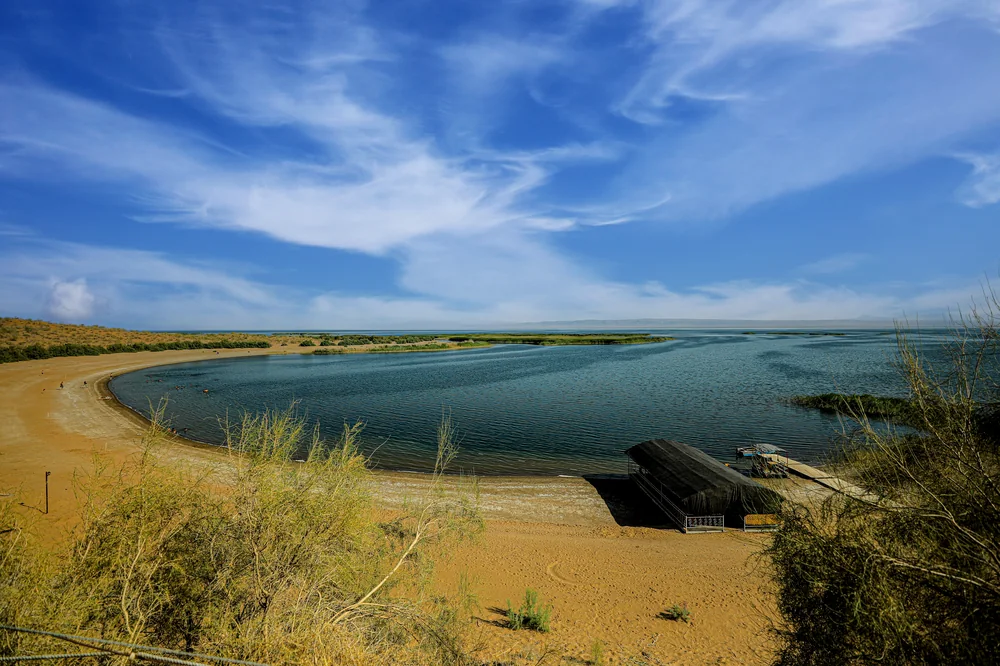
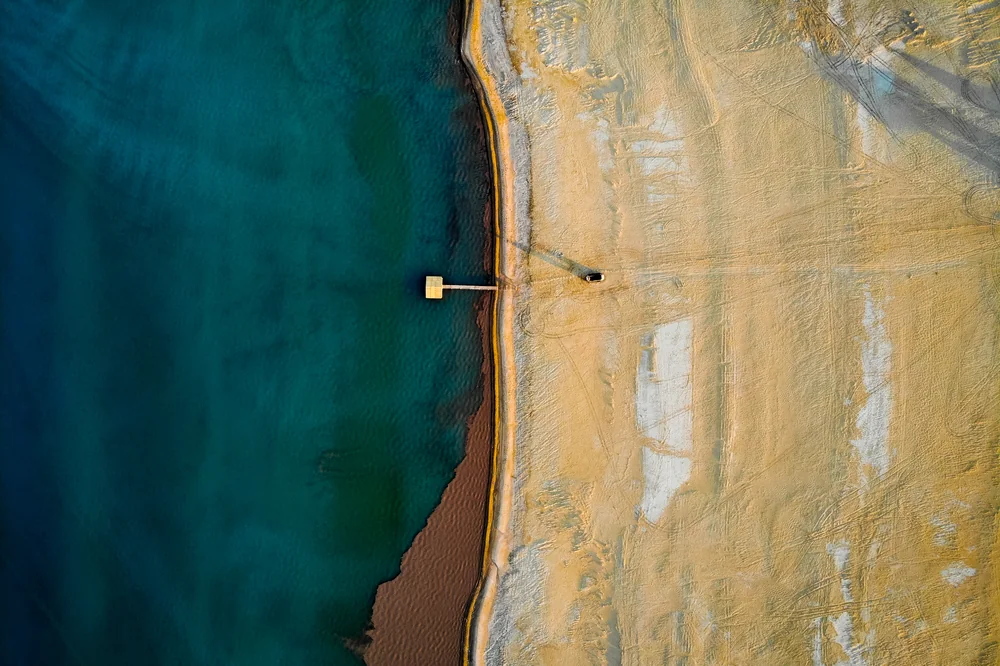
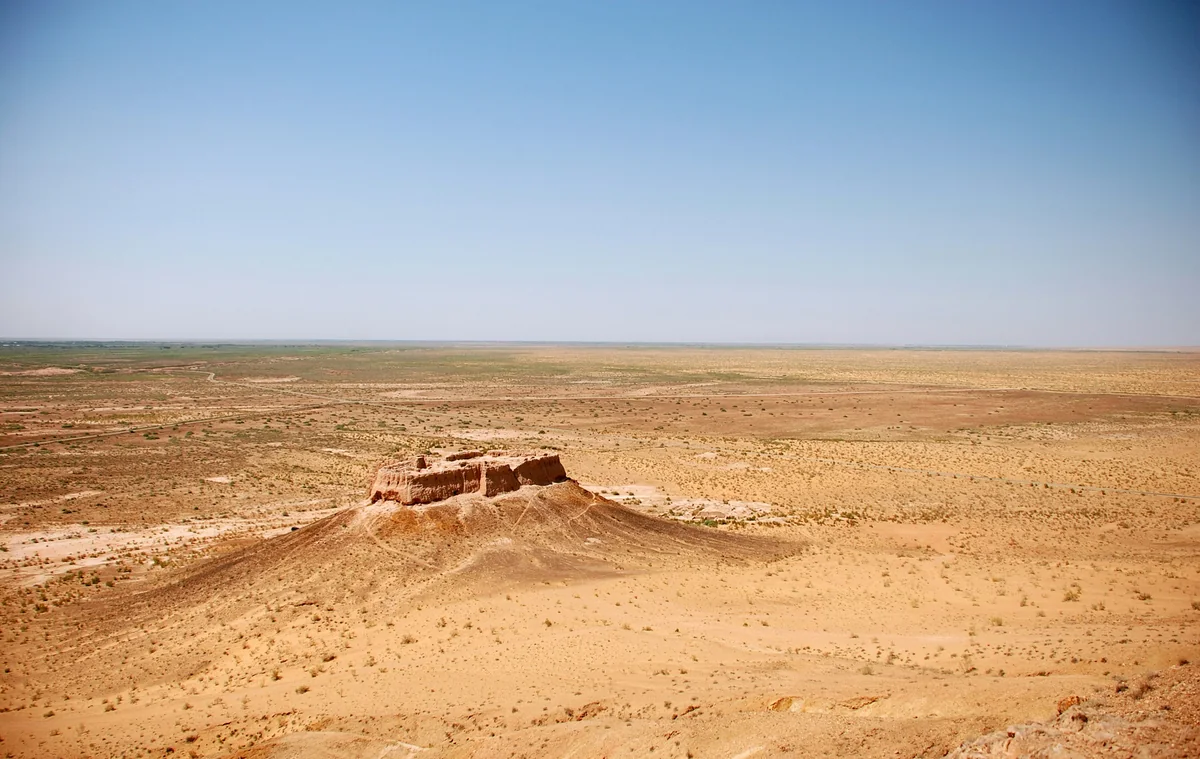
The real drive: off-road across the former seabed and up onto the Ustyurt plateau, its cliffs falling away to the north, and on to the current shore of the Aral Sea — the water that Moynaq lost.
Into a felt yurt near the water, with dinner cooked at the camp and a fire under an enormous, unpolluted sky.
Breakfast and time at the shore in the soft morning light, with the chance to walk the beach and, in the warm months, to swim in the salty water.
The return across the plateau and the steppe to Khiva — a long day on the road, arriving in the evening.